
Huawei FusionSolar 9.0: Advancing the Future of Intelligent Solar Energy Management
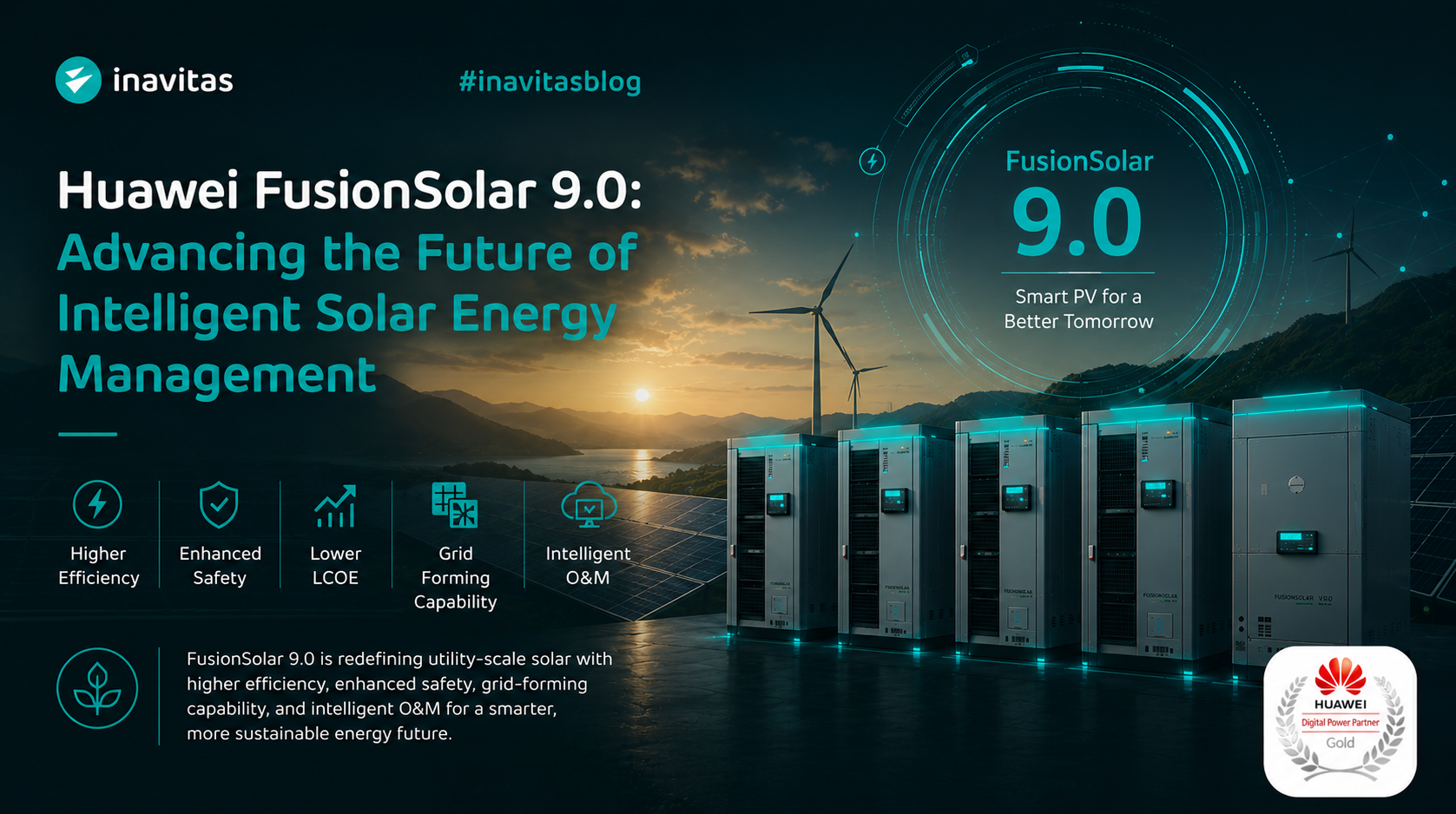
The global energy sector is rapidly evolving beyond traditional power generation. Today, innovation in renewable energy is increasingly focused on creating smarter, more connected, and more resilient energy systems. As solar energy adoption accelerates worldwide, the industry is moving toward advanced energy management technologies that can optimize performance, improve grid stability, and enhance operational efficiency across the entire energy lifecycle. From AI-powered monitoring platforms to intelligent energy solutions and grid-supportive renewable infrastructure, the future of clean energy is being shaped by digitalization and real-time intelligence.
This transformation was clearly reflected in the recent launch of FusionSolar 9.0 by to improve energy efficiency, reduce lifecycle costs, and strengthen grid resilience for large-scale renewable energy plants.
As Inavitas, a Gold Partner of Huawei Digital Power and a provider of intelligent energy management and monitoring solutions, we see FusionSolar 9.0 as an important milestone in the transition toward smarter and more sustainable energy systems. By combining advanced solar technologies with digital energy management platforms, the industry is taking a major step toward building intelligent, grid-responsive renewable energy infrastructure for the future.
A New Standard for Utility-Scale Solar Energy Solutions
FusionSolar 9.0 has been specifically designed for solar power plants operating in the megawatt and gigawatt range. The platform combines advanced inverter technologies, intelligent cooling systems, enhanced safety architecture, and grid-forming capabilities to improve both operational performance and long-term project economics.
One of the most significant innovations is the industry’s first 1,000V AC photovoltaic system architecture. Until now, most utility-scale solar plants operated at 500V or 800V AC levels. By increasing the voltage to 1,000V AC, Huawei enables longer string designs, simplified infrastructure, and reduced Balance of System (BOS) costs.
According to Huawei, these improvements can reduce BOS costs by approximately €0.27 to €0.55 per watt, creating substantial savings for large-scale renewable energy projects.
The Industry’s First Grid-Forming String Inverter
Another breakthrough introduced with FusionSolar 9.0 is the world’s first grid-forming string inverter.
Traditionally, grid-forming capabilities have been associated with battery energy storage systems. Huawei now brings this functionality directly into solar power generation through the new 506KTL string inverter, allowing solar plants to actively contribute to grid stability.
The grid-forming inverter enables:
- Reactive power response in under 10 milliseconds
- Improved voltage and frequency stabilization
- Virtual inertia support for weak-grid environments
- Enhanced compliance with evolving grid codes
-Reduced dependency on conventional stabilization systems
This innovation represents an important shift in how renewable energy plants interact with modern power grids. As renewable penetration continues to increase globally, intelligent solar energy solutions capable of supporting grid stability will become essential.
At Inavitas, we believe this transition toward intelligent, grid-supportive renewable infrastructure is one of the most critical developments shaping the future of energy management.
Lower Lifecycle Costs and Improved Operational Efficiency
Beyond grid services, FusionSolar 9.0 also focuses heavily on operational optimization and lifecycle cost reduction.
Huawei introduced several engineering advancements designed to maximize plant performance and reliability:
Smart Hybrid Cooling Technology
The new Smart Hybrid Cooling system improves heat dissipation by 30%, helping maintain stable inverter performance even under demanding operating conditions. Enhanced thermal management contributes directly to improved efficiency and equipment longevity.
Advanced Safety Systems
The upgraded SSLD v2.0 three-stage DC protection system actively detects electrical faults and shuts down within milliseconds, significantly improving system safety and reliability for utility-scale solar installations.
Enhanced Power Electronics
The newly developed IGBT module delivers:
- 25% higher voltage resistance
- 10% lower energy losses
- 20% higher maximum junction temperature
These improvements help optimize energy conversion efficiency while reducing maintenance and operational costs throughout the plant lifecycle.
Supporting the Next Generation of Intelligent Energy Systems
The renewable energy industry is entering a new era where solar plants are expected to deliver more than clean electricity generation. Modern energy systems must now be intelligent, flexible, digitally connected, and capable of supporting overall grid resilience.
During the launch event, Steve Zhang, President of Huawei Digital Power’s Utility Solar Business Unit, described FusionSolar 9.0 as:
“A fundamental redefinition of what a solar plant must be capable of delivering in 2026 and beyond.”
This vision strongly aligns with the direction of the global energy transition.
At Inavitas, we continuously work to support utilities, renewable energy portfolios, and industrial facilities through advanced energy management systems, real-time monitoring platforms, and intelligent energy optimization solutions. We believe technologies like FusionSolar 9.0 will play a critical role in accelerating the development of digital, grid-responsive, and AI-supported renewable energy ecosystems.
Inavitas & Huawei Digital Power: Driving the Intelligent Energy Transition
As a Gold Partner of Huawei Digital Power, Inavitas is proud to contribute to the deployment of next-generation solar energy and energy management solutions across the region.
FusionSolar 9.0 demonstrates how utility-scale solar plants are evolving into intelligent energy assets capable of delivering not only renewable power generation, but also grid stability, operational intelligence, and long-term economic resilience.
The future of solar energy is no longer only about generating electricity.
It is about building intelligent, connected, and sustainable energy ecosystems for the next generation.


